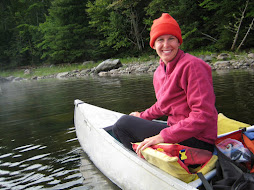
"Copucha Chilena" refers to being in the know. Copucha is a Chilean slang word for "the goings-on."

Monday, October 5, 2009

Fiesta de Zapallos

Last Sunday morning I went to the feria with my host mom and sister. The feria takes place every Sunday and sells produce, fish, meat, and used clothes, electronics, and anything else that you could think of. My host mom told me that it represents a more diverse group of Chileans because the prices are a lot lower than the grocery store. The market was crowded and we hopped back and forth between vendors to buy kilos upon kilos of fruits and vegetables. I bought zapallo, which is a relative of the pumpkin, so that Becca, Meera, and I could have a fall feast.

After lunch I went to Jumbo (the supermarket) and bought more ingredients for our “Fiesta de Zapallo.” Claudia and Javiera seemed very skeptical when we told them what we were planning. We spent several hours in the kitchen and made a spiced pumpkin soup, homemade raviolis with a pumpkin and ricotta filling, and pumpkin pie. After devouring the results Javi and Claudia agreed that pumpkins do make delicious meals!

El Teniente Copper Mine

The most recent Tufts-sponsored trip was to El Teniente, one of the world’s largest mines. We took into the mountains south of Santiago and stopped at the Teniente gate to get dressed and learn about safety. We wore hard hats, lights, goggles, breathing mechanisms, orange jackets, tool belts, and boots. Honestly, dressing up was one of my favorite parts of the day.

Our guide took us into the mine in a van and then we got out and went into the control center. The mine uses technology to drill in the tunnels that are not safe enough for people. There are computers with cameras that you can control with joysticks. The machinery and drills are also controlled by joysticks. We got to sick in the chairs and drill through rocks, cyber-style!
We also visited a cave with the biggest crystals I have ever seen and a tunnel with a rock crusher that was smashing boulders. After the tour we had lunch with some miners in the cafeteria underground. When we got out of the mine it was snowing and we had to walk around a ghost town and look at old houses, streets, etc. The mine was awesome but the ghost town was a little boring.

Fracaso

Life is not perfect. Sometimes that is hidden behind numerous successes and joyful moments, but other times it is quite clear. The other morning reminded me that there are times when plans do not work out and ideas never move past the idea phase.
My day started out with a 10:45 meeting for my internship at the Juan Gomez Millas campus in ñuñoa. I had a class downtown at 12 so I had tried to move the meeting up but I was assured that we would be done by 11:20. I budgeted an appropriate amount of time to get to the campus and I arrived 5 minutes early. I figured that nobody would be there because Chile does not run on time so I found a seat and waited. After 20 minutes I started worrying that I was confused and had not understood the email in Spanish. I started walking around and I ran into my boss. She was just arriving and she called to see where the other girls were. The other two, who work in the building, were just running late. The meeting finally started at 11:15. I had to leave at 11:20 so that was not very useful for me.
When I left the meeting I asked the girls for directions. They are Chilean so I figured they might have better directions then the ones I found online. False. They told me to take any micro south front the front of the campus and then to get off at Irarrazaval and take the metro. I hopped on a micro in the right direction and asked the driver if he could tell me when to get off. Turns out this micro did not go to Irarrazaval. So I asked him if it went to any metro stations. My answer: “Más o menos.” (more or less.)Very helpful. A nice lady asked me where I was trying to go and when I told her she looked surprised. She said that she was getting off near a metro and that I could walk with her. She was very friendly and we chatted about different getting lost experiences. I never would have found the metro without her help because we were on the micro for at least 20 minutes and then had to walk several blocks in a Santiago neighborhood that I was completely unfamiliar with. We ended up at a metro station that I had never heard of and she warned me not to talk on my phone or look lost. I thanked her and headed towards el centro.
When I got to my class building I got a text from a friend that said that class had been moved and that it was now on the 3rd floor. I went to the 3rd floor and started looking for a dance room but I only saw offices. A women asked me what I was looking for and told me that to get to the other side of the floor I had to go down to the 2nd floor, walk across the building, and then go back again.
I am very familiar with the Spanish verb fracasar. Fail. But not every fracaso is a negative experience. This time I got to meet a really nice Chilean woman and see a neighborhood that I would not otherwise have seen.

Sunday, October 4, 2009

Jumping Alpaca

Crazy alpacas in Machu Picchu

Chinchero homestay

The next morning we took a colectivo back to the Sacred Valley for our homestay in Chinchero. Chinchero is a small town that relies mostly on animal husbandry, livestock, and handicrafts. We met our host dad at the bus stop, walked to the house, and met our host mom and 7yr old sister Milagros. After settling in they took us to their store where we met our older host sister. In the late afternoon Milagros took us to the town’s Catholic church and then to the Incan ruins. Along the way Milagros’ little cousin started following us. When we got to the ruins the little girls announced that now we were going to play. They started gathering twigs and grass for ‘food’ and we played ‘house’ with them. We cooked pretend cuy (guinea pig) and drank lots of chicha morada. I was playing right along and then I realized how special the moment was. We were playing ‘house’ with two Quechua girls on Incan ruins with a spectacular view.

For dinner our host mom made lomo saltado and we ate with Milagros. Everyone went to bed early because the day starts early in Chinchero. In the morning we ate egg and corn pancakes and had the most delicious whole milk, unpasteurized hot chocolate I have ever tasted. Then we walked around the market in the main square and learned how to dye alpaca wool to make yarn for sweaters and hats. We said goodbye to the family and headed back to Cusco in the late morning.

Puno- Lake Titicaca

After arriving back in Cusco from Machu Picchu we had several hours before our overnight bus to Puno. We got a recommendation for a local chifa (Chinese-Peruvian fusion) restaurant and tried it out. As soon as we walked in I could feel China. The restaurant was small, dimly lit, crowded, cheap, had stools instead of chairs, plastic menus, and a few red lanterns. We asked for help ordering and ended up with great wonton soup, fried noodles and rice, and some meat dishes.

Our bus departed at 10pm and was awful. We had nice seats but the Israelis behind us were talking the whole time. The bus was too hot and we couldn’t get them to turn on the air. The road was curvy and gaining altitude and people were getting sick throughout the night. If I managed to sleep at all during those 7 hours it was for half an hour maximum. We arrived in Puno at 4:30am and sipped on coca tea for 2 hrs in the bus terminal. This was probably the lowest point of an otherwise amazing trip.

At 8am we boarded our boat and headed out on Lake Titicaca, the world’s highest navigable body of water. Our first stop was the Uros or floating islands of the Aymara people. This was too touristy for my liking but it was interesting to learn how the people make the islands, boats, houses, schools, food, etc. After an hour we loaded the boat again and headed (very slowly) towards Amantani Island.

When we arrived in Amantani we were paired with our host family and started the trek, yes trek, to our house. I was not feeling very well and the long, hot, uphill hike did not make me feel better. When we arrived at the house I got in bed and stayed there all evening. I think that I had a combination of altitude sickness, exhaustion, and bacteria from food. Amantani is more than 4000m (13,000 feet) above sea level. Our Quechua family was very nice, spoke good Spanish, and cooked great meals. I did not know that so many types of potatoes and tubers existed until eating dinner with them. I unfortunately missed a hike to the top of the island and a dance where I would have gotten dressed up in traditional clothes but I decided to sleep so that I would feel better for the rest of the trip.

In the morning we went to Taquile Island and learned about their customs. Taquile’s inhabitants are still very traditional and maintain rules about intermarriage. You can tell whether or not young men are single or taken by the style of hat that they wear and how they wear it. We walked up and across the island and had lunch in a restaurant in the Plaza.

When we got back to Puno the first thing we did was try to change our bus tickets for the earliest possible bus. After the awful overnight experience we wanted to get it out of the way as early as possible to that we could still get a hostel when we got back to Cusco. We changed our tickets for a local bus at 6pm. This simple decision turned into one of my most interesting experiences in Peru. I was wearing two jackets and had my money, passport, and camera split between my inside pockets and socks. As I found my seat a group of Peruvian women in traditional dress was hustling on and off the bus with boxes, bags, blankets, cushions, food, children, and anything else you could think of. They crammed the boxes and bags under their seats then piled them up on top of their seats and covered them with blankets. After everything was loaded they perched on top of the huge stacks and settled down. About 30 min into the ride a really big lady comes over to me and asks if the empty seat next to me is taken. There were lots of other free seats on the bus so asked her if she wouldn’t mind sitting somewhere else. She took that as an invitation to sit down and started moving boxes into my seat. Between her body size, the boxes, and the blankets I was left pushed up against the window. I thought it was kind of amusing though so I let the situation enroll.

An hour later the entertainment increased as we were joined by a travelling candy bar salesman and his clown puppet. His candy was called Killate- which in Spanish doesn't mean anything- but in Spanglish is the command for kill you! If that wasn't enough to creep us out on a dark local bus he kept going around asking for money and then saying "Don't worry, I won't rob you or murder you. I'm just trying to make money."

Several hours later, while I was dozing off, all of the women starting frantically moving boxes around, taping boxes together, and covering them with blankets. They filled the seat next to me, covered it up, and asked me to sleep on it. I pretended not to understand Spanish and watched as they jumped back into their seats. The bus stopped and a police officer from a road block entered, walked down the aisle with a light, questioned a few women, then left. As the bus pulled away all of the women relaxed. The road got really curvy as we neared Cusco and the women started chewing coca leaves like crazy. We arrived in Cusco at 1:45am and headed straight for our hostel to sleep.

Machu Picchu

We arrived in Cusco, Peru in the afternoon and as I pulled my backpack off the conveyer belt I got my first taste of high altitude. I felt short of breath just from walking to the van and loading my bag. The altitude did not make me feel sick but I was constantly aware of my breathing as we walked around. I appreciated the coca tea when we arrived at the hostel!

The first night we went all out for Peruvian food. We ordered aji de gallina, alpaca brochette, quinoa soup, and cuy...aka whole roasted guinea pig. The guinea pig came cut in half with the innards and brain exposed and still had teeth and claws. I dug right in and was fairly impressed with the taste of the meat but was put-off by the number of small bones that I had to sort through.

I woke up early the next morning in anticipation of Machu Picchu. When I used to think about South America the most frequent images that I would see belong in Peru. For me, the Indigenous groups, high peaks of the Andes, and Amazon jungle lowlands of Peru epitomized South America. I've learned a lot more about the continent since then but I was excited to be in Peru and experience these images.

We walked to the colectivo station and found a taxi that was headed to Ollantaytambo. Ollantaytambo is a small town in the Sacred Valley that serves as the starting point for many trips to Machu Picchu. The ride to Ollantaytambo was spectacular and my face was glued to the window the entire time. We climbed up a ridge beside Cusco and were able to see the entire city before descending into the next valley. As we drove (sped) along the road we passed small towns, traditional farms, and incredible mountain and valley views. Ollantaytambo sits on the Urubamba River and has Incan ruins alongside traditional Peruvian houses. The hour-long PeruRail ride follows the banks of the Urubamba River and goes from dry mountain valleys to a semi-jungle landscape. We had the front seats on the train and enjoyed the best view out of all the passengers.

The next morning in Aguas Calientes we woke up at 3:00am and were outside in line for the bus by 3:45. We took advantage of the entrepreneurs that were selling coca tea and sandwiches while we waited for the first bus to depart at 5.
The bus climbed some of the steepest switchbacks I have ever seen on the way up to the Machu Picchu entrance. We made it in time and were among the lucky visitors that got tickets to climb Waynu Picchu at 7am. As we made our way to the start of the hike we watched the first rays of sun come over the mountains and move across the Incan ruins. It was absolutely spectacular and worth waking up at 3am to see.

The climb up Waynu Picchu was challenging and steep but rewarding. As we reached the top we found ourselves walking along rock cliffs that plummeted into the valley below. I was a little unnerved but once we reached the very top we were away from the cliffs. From high above Machu Picchu we could look down on the alpacas sleeping in the ruins. We picnicked near the top before climbing back down to explore the ruins.


We spent another night in Aguas Calientes but were unable to sleep in because the check-out time was 9am. Our train was at 2pm so we perused the handicrafts market and had a long lunch (that we bargained for and ended up paying $4 for an appetizer, main course, dessert, pisco sour, and juice). When we arrived at the train station we were told that our train had been changed and that we would have to wait another 2 hrs. As we sat down another train pulled in and started to load. We went back to the ticket booth and asked why we couldn't be on that train but were simply told that we couldn't. Since that is not an acceptable response we asked another employee and started arguing our case. Everyone else with our tickets had been notified in advance of the change and did not have to wait. As the man got more and more frustrated with us I was presented to "the boss" and we managed to get seats on the train. Take that PeruRail; three girls can travel alone.